

Character References: Washington (1776) & Hudson (1609)
Compiled by TimeWalker for TimeWalk — August 2026.
A public-domain reference image pack for Huascar’s MetaHuman character builds. Each figure is frozen at a specific TimeWalk moment: George Washington on August 29, 1776 (the retreat from Brooklyn) and Henry Hudson in September 1609 (captain of the Halve Maen off Mannahatta). Every image below was verified public domain (or CC0) on its Wikimedia Commons file page before inclusion, with artist, date, and collection noted.
Related pages: George Washington · Henry Hudson and the Halve Maen · MetaHuman Likeness Reference (Hamilton, Burr, Stuyvesant) · Manhattan 1776 · Manhattan 1609
George Washington
As of August 29, 1776 — age 44, Commander-in-Chief of the Continental Army, directing the night retreat from Brooklyn Heights across the East River after the Battle of Brooklyn.
Appearance notes for the build
- Age at the moment: 44 (born February 22, 1732).
- Height / build: Imposing — about 6 ft 2 in, broad-shouldered, long-limbed, large hands; an acclaimed horseman’s posture. He towered over almost everyone around him.
- Hair: His own hair (not a wig) — reddish-brown / auburn, worn pulled back, powdered and queued (tied in a ribbon) for formal appearance; by late August in the field it may read as lightly powdered or unpowdered.
- Eyes: Blue-grey, deep-set under a heavy brow.
- Face: Long, broad-jawed face; high forehead; prominent nose; pockmark traces from smallpox (subtle); mouth kept closed and composed (troublesome teeth). Calm, reserved, commanding expression.
- Uniform: Blue-and-buff Continental Army general’s uniform — dark blue coat with buff facings and buff small-clothes (waistcoat and breeches), gilt buttons, epaulettes; black cockade on a black tricorne; high black boots; sword. This is the uniform documented in the Peale 1776 portrait below.
- Bearing: Exhausted but unshakeable — on Aug 29–30 he had not slept in days and personally oversaw the boat evacuation of 9,000 men.
Costume spec — night of August 29–30, 1776 (the evacuation)
Practical modeling guidance for the MetaHuman build, pinned to the exact moment: Washington mounted near the Brooklyn ferry landing, directing the night crossing of ~9,000 men.
Scene context (verified): The retreat was staged under cover of darkness in the tail of a northeast storm — rain and hard wind had lashed the lines for two days, and the same northeaster kept British warships out of the East River (Mount Vernon, Battle of Long Island — Wikipedia). The wind eased near midnight; toward dawn on the 30th a dense fog settled over the river and Brooklyn shore, covering the last boats. Washington stayed at the embarkation point through the night and was reportedly among the very last to cross, around 7 a.m. Lighting: rain-dark night → pre-dawn fog, lanterns shielded, no moonlight.
- Base uniform: the documented blue-and-buff Continental general’s uniform (as in the Peale 1776 above) — dark blue wool coat faced buff, buff waistcoat and breeches, gilt buttons — but read as field dress, not parade dress: matte, rain-soaked wool, mud-spattered skirts and cuffs, no sheen anywhere.
- Commander-in-Chief insignia: the light-blue silk ribband worn diagonally across the chest, between coat and waistcoat — ordered as his distinguishing badge in the General Orders of July 14, 1775 and still his insignia in August 1776 (he wore it c. 1775–1779; the later stars-on-epaulettes scheme came afterwards). It appears in the Peale 1776 portrait painted weeks before this night (Boston 1775 on the ribband order, Museum of the American Revolution — the surviving sash). At night under rain it may sit beneath an outer layer — keep it modeled for any coat-open or cloak-back read.
- Hat: black cocked hat (tricorne) with black cockade, rain-limp, brim shedding water.
- Outer layer (plausible inference, not documented): a plain dark wool riding cloak or watch cloak against the rain — he was mounted in a nor’easter for most of the night, so a soaked cloak over the uniform is a defensible and recommended read; no source pins the specific garment, so keep it generic and unornamented.
- Legs/feet: high black riding boots with spurs (he was on horseback at the ferry stairs), mud to the knee; leather dulled and wet.
- Kit: sword at his side; no polished gorget theatrics; everything matte, wet, and functional.
- Face/energy: 44 years old and running on roughly two days without real sleep since the Aug 27 defeat (widely reported in accounts of the retreat, e.g. Mount Vernon) — hollow-eyed, rain on the face, composure held by will. Avoid any hint of the serene marble-portrait Washington; this is the exhausted commander at the edge of losing the war.
Reference images
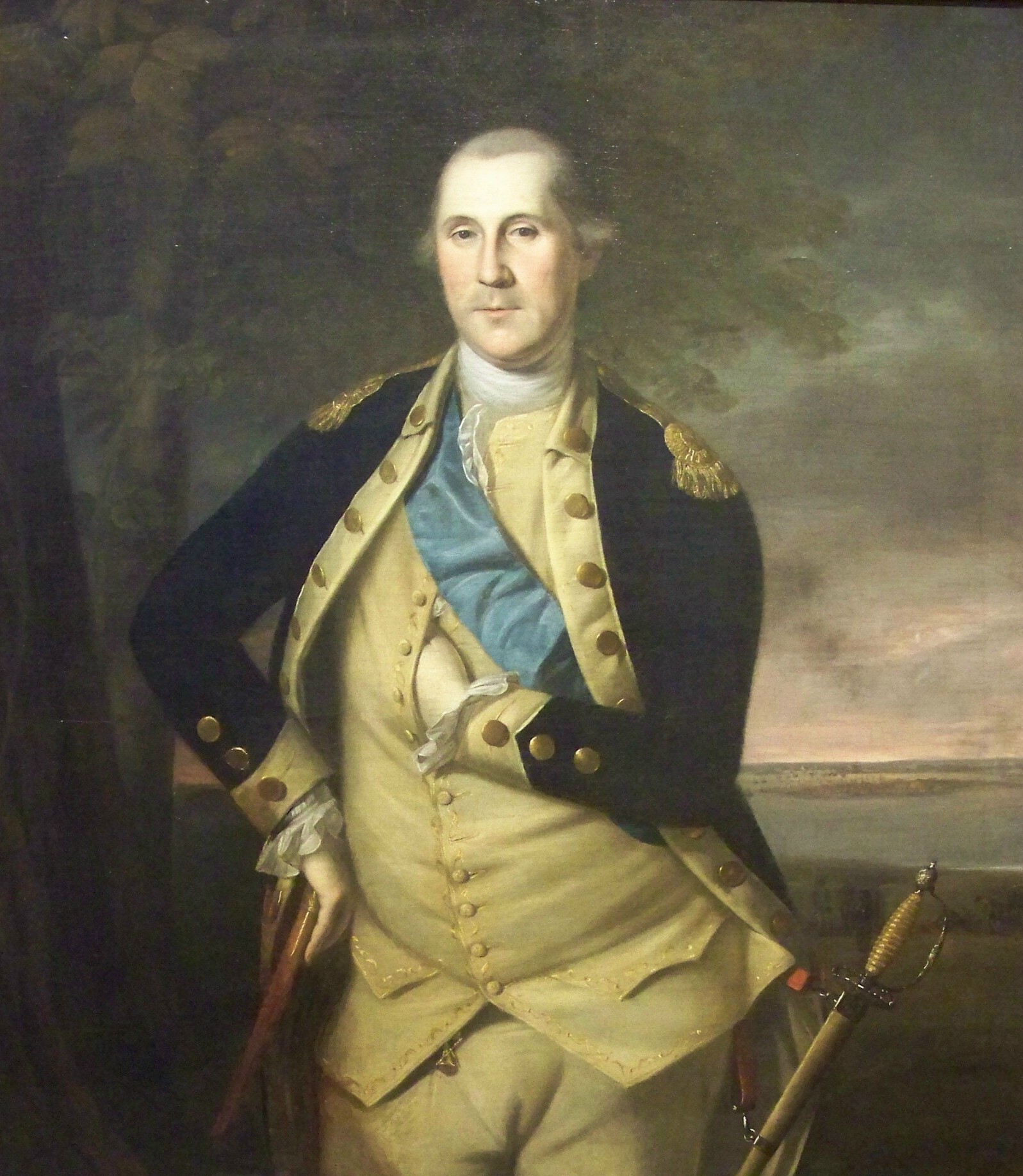 PRIMARY — Charles Willson Peale, 1776 (Brooklyn Museum). Painted from life May–June 1776 in Philadelphia, weeks before the Battle of Brooklyn — the single best likeness of Washington at exactly our moment: age 44, in the blue-and-buff uniform of the Commander-in-Chief. Public domain. — Source (Wikimedia Commons, PD)

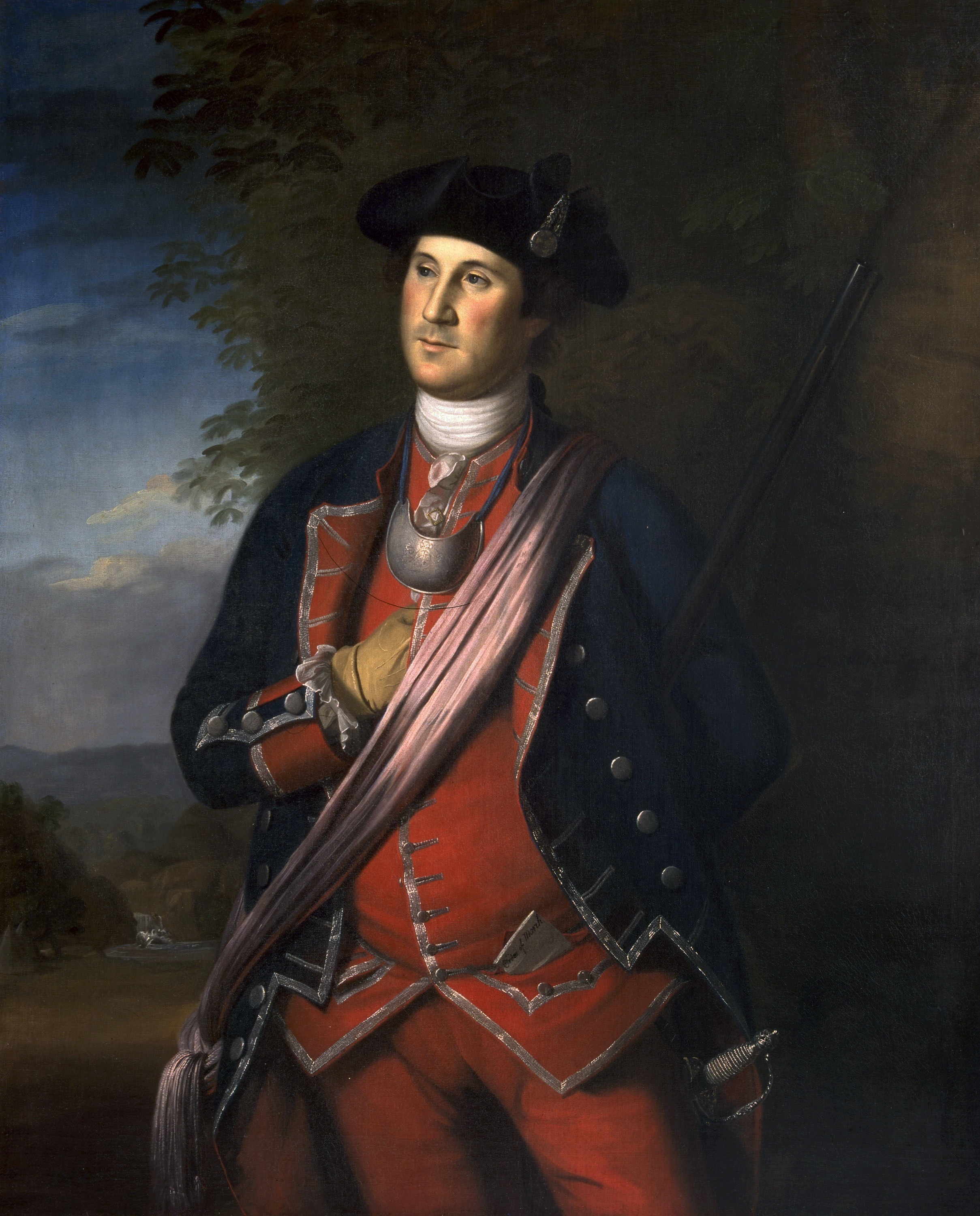 Charles Willson Peale, 1772 (Washington–Custis–Lee Collection, Washington and Lee University). The earliest authenticated portrait of Washington, at age 40 in his French & Indian War colonel’s uniform. Use for face-shape comparison only — four years younger and a different (red-and-blue Virginia Regiment) uniform, not the 1776 Continental uniform. Public domain. — Source (Wikimedia Commons, PD)

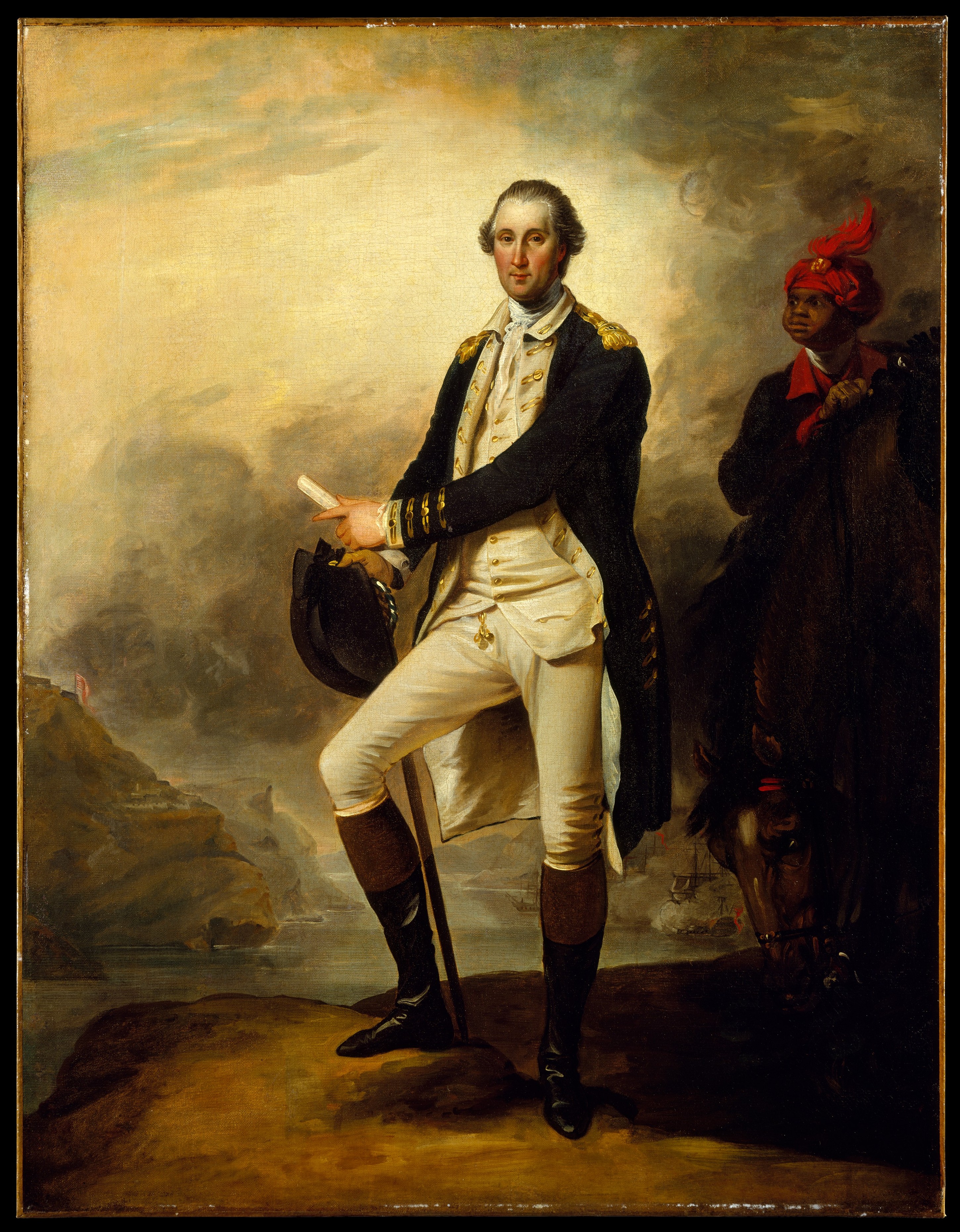 John Trumbull, 1780 (Metropolitan Museum of Art, open access CC0). Full-length portrait by a former aide-de-camp who saw Washington daily — the best high-resolution reference for the blue-and-buff general’s uniform, epaulettes, boots, sash, and kit. Painted four years after our moment; read the face slightly back toward the Peale 1776. — Source (Wikimedia Commons, CC0/PD)

Henry Hudson
As of September 1609 — English navigator commanding the Dutch East India Company’s Halve Maen (Half Moon), exploring the harbor and river that would bear his name.
No authentic portrait of Henry Hudson exists. None was made in his lifetime, and no contemporary physical description survives. Every familiar “Hudson” image — including the one below — is a posthumous 19th-century invention. His biographer Thomas A. Janvier put it flatly: “No portrait of Hudson is known to be in existence. What has passed with the uncritical for his portrait — a dapper-looking man wearing a ruffed collar — frequently has been, and continues to be, reproduced. Who that man was is unknown. That he was not Hudson is certain.” The face is therefore the designer’s choice.
Appearance notes for the build
- Age at the moment: Unknown; conventionally assumed ~40–45 (birth usually placed c. 1565–1570). Play him as a weathered mariner in his early-to-mid 40s.
- Face: Designer’s choice (see warning above). A plausible read: weather-beaten English seaman, beard and mustache trimmed in the Jacobean style (short, pointed), lined eyes from years of Arctic glare.
- Costume — c. 1609 English shipmaster, NOT later “cavalier” style:
- Wool doublet, close-fitting, plain or modestly slashed — working sea dress, not court finery.
- Falling band (soft turned-down linen collar) or a small ruff — the transitional neckwear of exactly this decade. Avoid the wide lace collars and long lovelocks of the 1630s–40s cavalier look.
- Baggy slops / venetians (loose knee breeches), wool stockings, sturdy leather shoes or sea boots.
- Sea gown / cassock — a loose, heavy wool overgown or cassock coat against the weather; a flat cap or brimmed felt hat.
- Practical kit: whistle or small hanger (short sword) on a baldric befitting a master; nothing gilded.
- Crew context: The Halve Maen carried a mixed Dutch-English crew of ~16–20, including Hudson’s teenage son John.
Costume spec — September 11, 1609 (entering the harbor, first sight of Mannahatta)
Practical modeling guidance for the MetaHuman build, pinned to the exact moment: Hudson on the deck of the Halve Maen as she passes through the Narrows into the upper bay and stands in toward Mannahatta.
Scene context (verified): Mate Robert Juet’s journal records September 11, 1609 as “faire and very hot weather” — that afternoon the ship weighed anchor, came through the Narrows into what Juet called “a very good Harbour for all windes,” and rode there all night; on the 12th (also “very faire and hot”) she began working upriver (Juet’s journal, 1609 — Library of Congress facsimile, New Netherland Institute — the Half Moon). So this is a hot, fair, late-summer afternoon — bright sun, light working breeze, calm water. Dress him for heat, not for weather.
- Overall read: a working English shipmaster aboard a small Dutch VOC vlieboot — practical sea dress of c. 1609, not court finery and not the 1630s–40s cavalier look (no wide lace collars, no lovelocks).
- Doublet: close-fitting wool doublet, plain or modestly slashed, in a sober sea color (russet, brown, dark grey). Given Juet’s “very hot”, an unbuttoned or shed doublet over full shirtsleeves is a defensible working look for the moment — linen shirt visible, sleeves pushed.
- Neckwear: a falling band (soft turned-down linen collar) is the likelier working choice for shipboard heat; a small starched ruff is period-possible but reads as shore dress. Definitely no big cartwheel ruff on deck.
- Below the waist: full slops or venetians (loose knee breeches), wool stockings, sturdy leather latchet shoes (sea boots stowed — dry deck, fair weather).
- Headwear: knitted Monmouth cap or a brimmed felt hat against the sun; flat cap also period-correct.
- Outer layer: the heavy sea gown / cassock stays OFF in this scene — it exists in his kit (show it slung or below) but the day is hot; shedding it is what a real mariner would do.
- Kit: whistle or small hanger on a baldric befitting a master; nothing gilded; hands and face weathered from a career of Arctic glare.
- Caveat (unchanged): no authentic portrait of Hudson exists — the face remains the designer’s choice (see warning above). This spec pins only the clothing and the moment, not the man.
Reference images
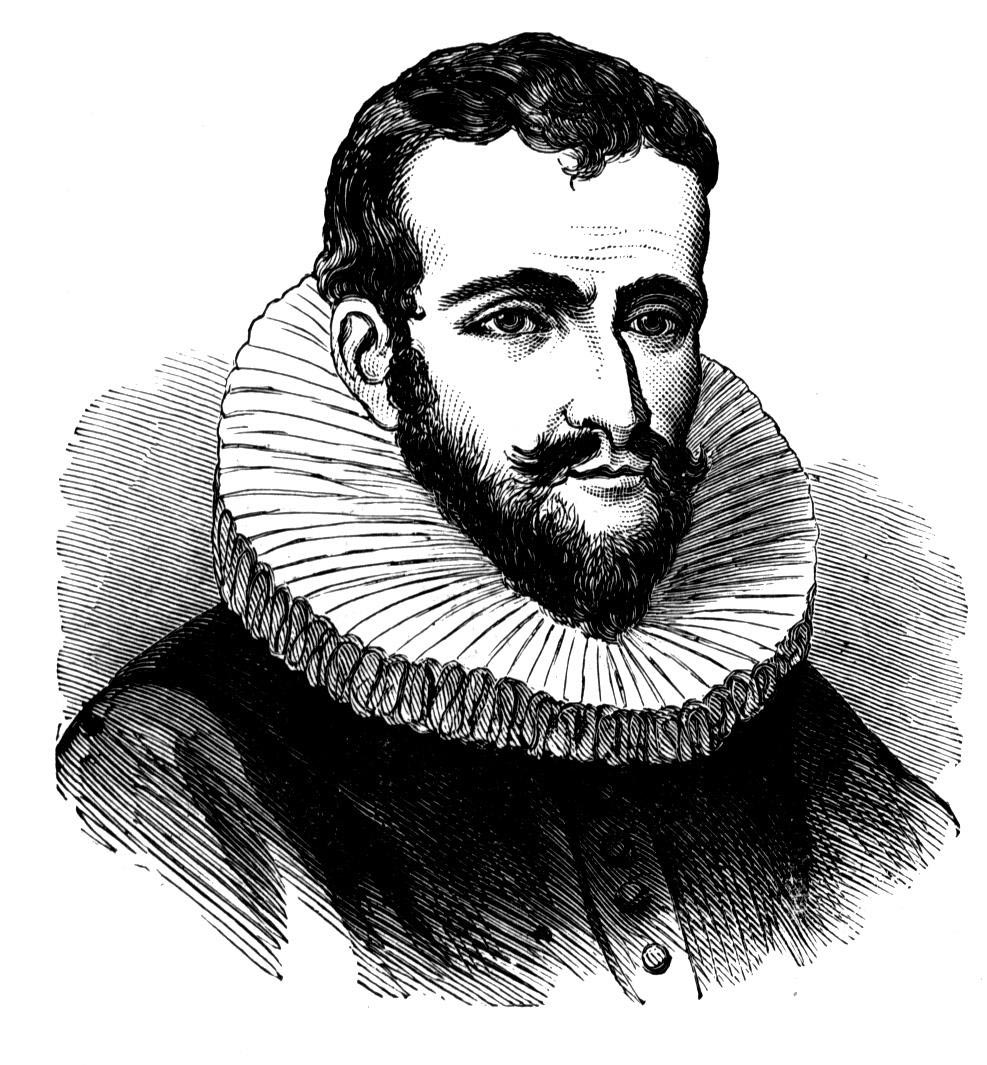 APOCRYPHAL — Unknown engraver, Cyclopaedia of Universal History, 1885. The most widely reproduced “Hudson” — and certainly not Hudson (see Janvier quote above). Included only because it is the image the public associates with him; the ruff-and-doublet costume it shows is at least period-plausible. Public domain (PD-old). — Source (Wikimedia Commons, PD)

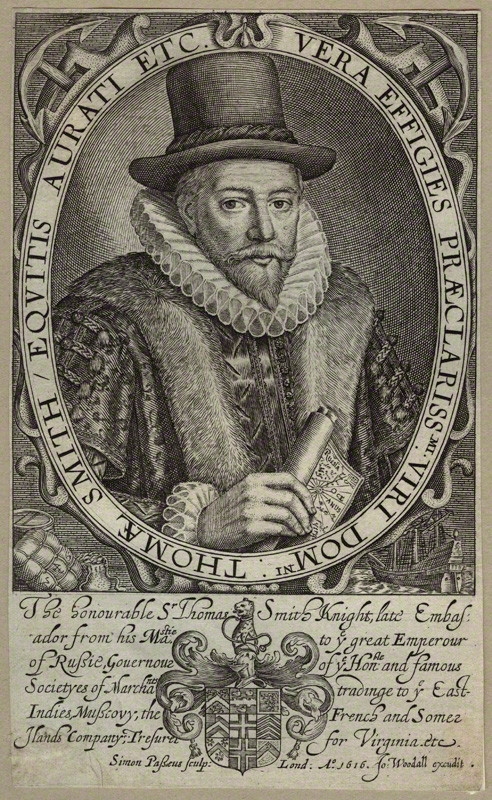 COSTUME — Sir Thomas Smythe, engraved by Simon van de Passe, 1617 (National Portrait Gallery, London). Governor of the East India Company and a backer of Hudson’s 1610 voyage — a documented member of Hudson’s exact London maritime world, in the ruff, doublet, and gown of a merchant-mariner grandee of the decade. Public domain. — Source (Wikimedia Commons, PD)

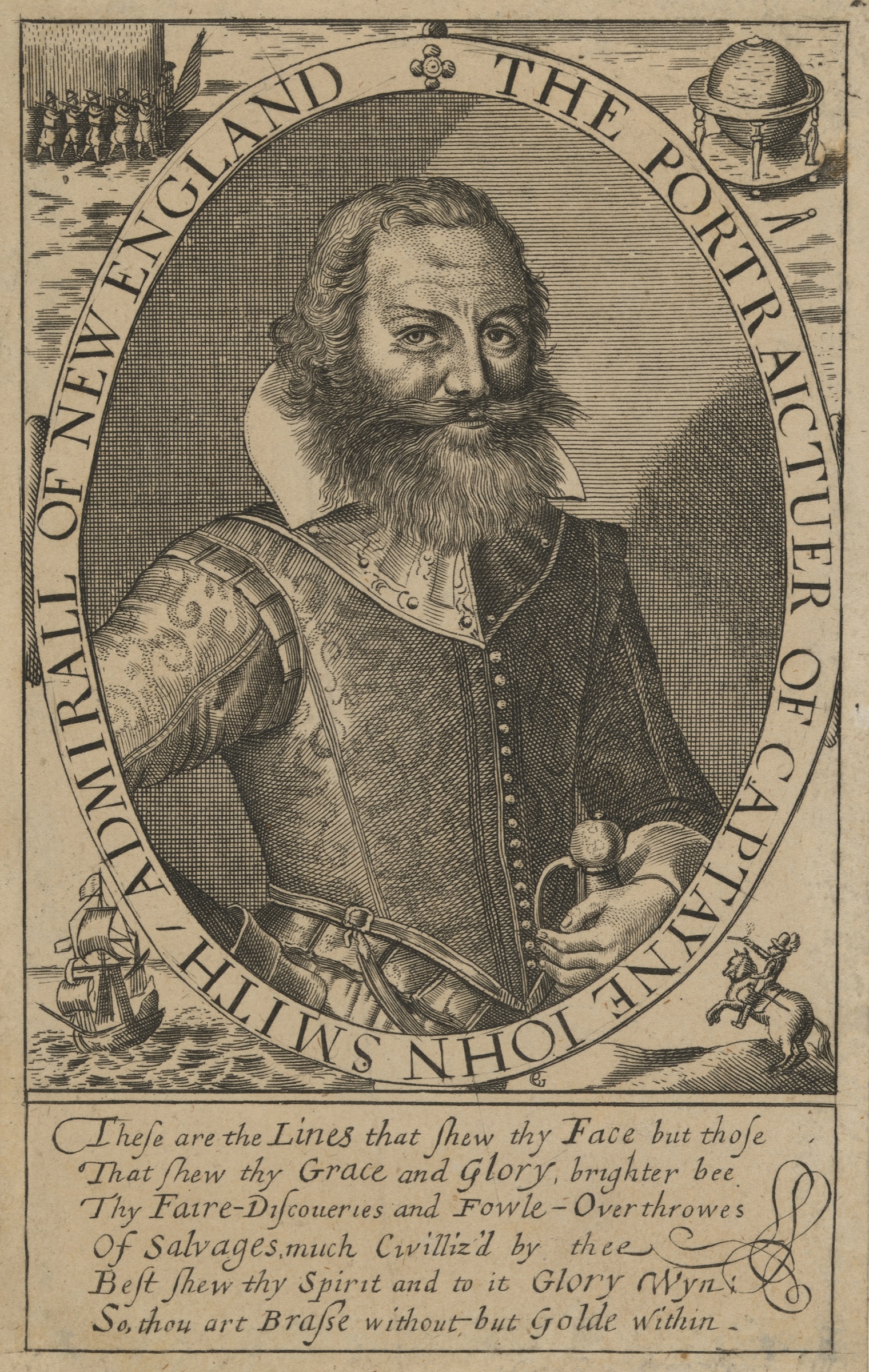 COSTUME — Captain John Smith, engraving c. 1617, possibly after Simon van de Passe (Smithsonian National Portrait Gallery, CC0). An actual working English sea captain of Hudson’s own years — buff coat, small falling collar, trimmed beard, sword baldric. Excellent for the practical-mariner (rather than courtier) read of Hudson. — Source (Wikimedia Commons, CC0/PD)

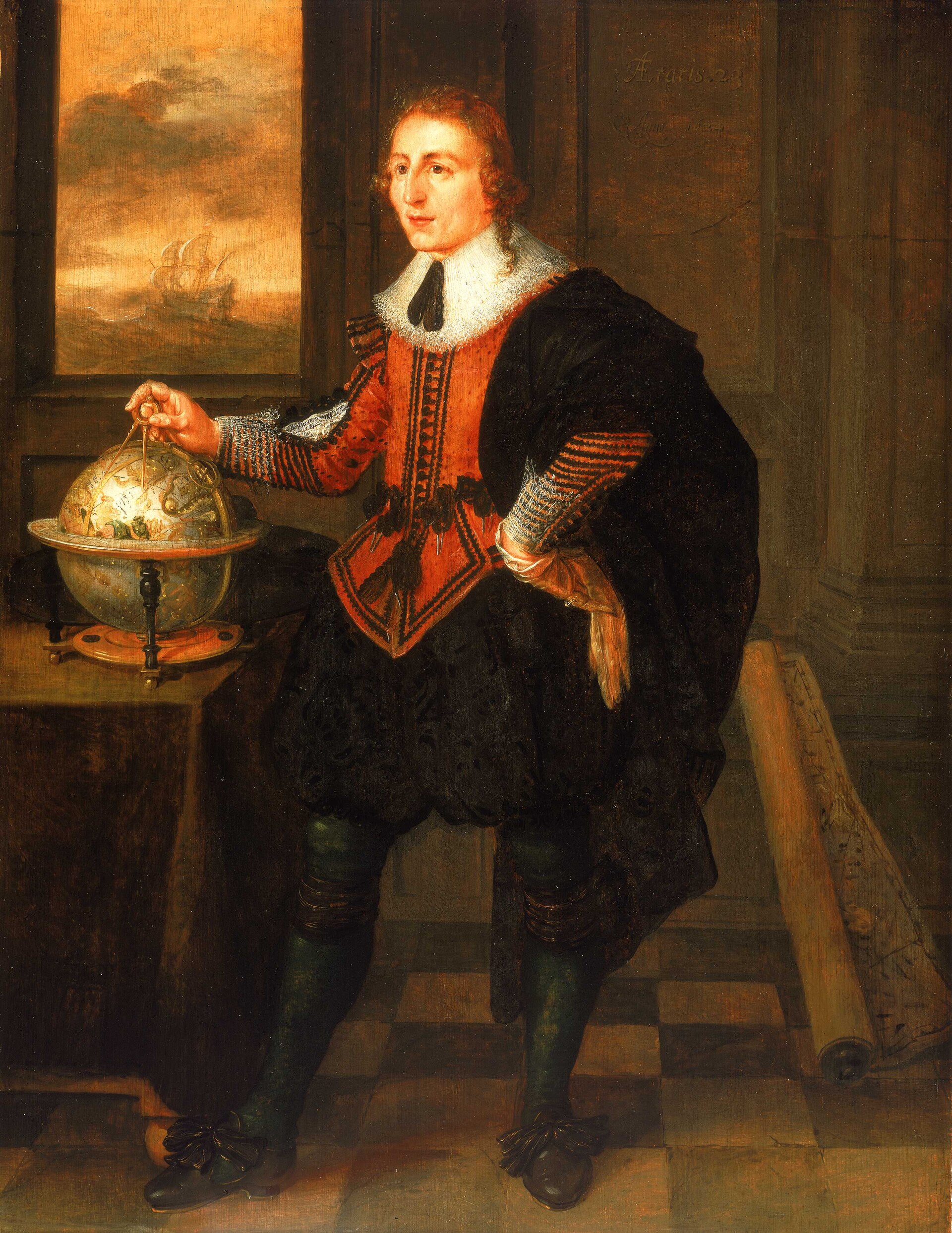 COSTUME — “A Navigator with Globe and Dividers,” Hendrik van der Borcht the elder, 1624 (Royal Museums Greenwich). Full-length portrait of a navigator with celestial globe, dividers, and rolled chart — brown doublet, black cloak, ruff. Painted 15 years after our moment but still pre-cavalier; use for the full-body silhouette, navigation props, and fabric detail. Public domain. — Source (Wikimedia Commons, PD)
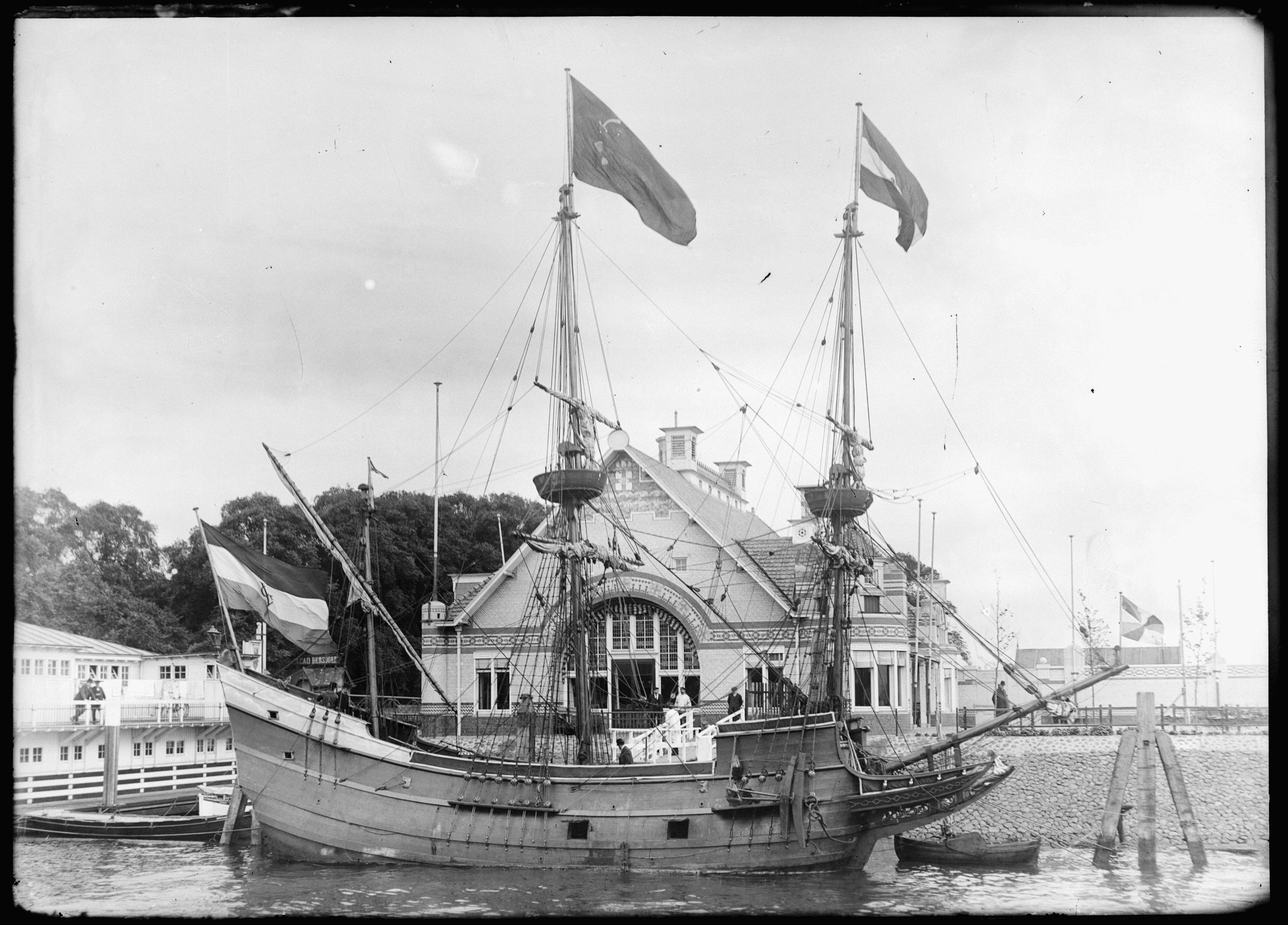 SHIP — The 1909 Halve Maen replica, photographed in the Veerhaven, Rotterdam, 1909 (photo: F. H. van Dijk, Rotterdam City Archives, CC0). The replica built in the Netherlands for the Hudson–Fulton Celebration — the standard visual reference for the ship’s hull form, rig, and scale (~85 ft). — Source (Wikimedia Commons, CC0)

Second pass — working-sailor costume & kit references (added September 2026)
Added after Huascar’s first Hudson build (Sept 10, 2026). The build already reads well for a hot-day shipmaster in shirtsleeves; these references target the remaining details — shoes, headwear, breeches/hose, and how ordinary Dutch/English working men of exactly 1599–1608 actually dressed — since no portrait of Hudson exists and the earlier refs above are mostly gentry-grade.
Top-line notes for the build
- Shoes: no buckles. Buckled shoes only become common in the 1660s+. In 1609 a shoe closed with latchets — two straps over the instep tied with a lace or ribbon — over a low or no heel, rounded or squared toe, welted or turn-welt construction, leather usually black or natural brown. Sea boots existed but a fair-weather deck day means shoes.
- Hose / stockings: knitted or cloth wool stockings gartered at the knee under the slops, often with the garter tied in a visible bow at the side of the knee (see the de Gheyn plate).
- Slops: full, baggy, tied/gathered just below the knee — the current build’s silhouette is right.
- Headwear: a Monmouth cap (brown knitted, felted wool, tiny loop at the crown) is the archetypal English sailor’s cap of the period; a tall narrow-brimmed felt hat is the Dutch working-man’s look (Avercamp, de Gheyn). Bareheaded on deck in the sun is the least likely option.
- Neck: small plain falling band or just the open shirt collar — the current build’s open collar is fine for a hot afternoon.
- Waist: a plain leather belt with a small iron/brass buckle is period-correct for working men (the buckle prohibition is for shoes, not belts). A hanger or whistle hung from a baldric or belt marks him as the master.
- Face: still the designer’s choice — but the two 1607 portraits below show how Dutch/English seamen of Hudson’s exact decade actually wore beard and hair: short pointed beard, moustache, hair cropped or collar-length, no long lovelocks.
 FACE/GROOMING — Jacob van Heemskerck (1567–1607), engraved by Crispijn de Passe, 1607 (Rijksmuseum, RP-P-1898-A-20615). A Dutch VOC navigator and admiral of exactly Hudson’s generation and employer — Arctic veteran of the Barentsz overwintering (1596–97), killed at Gibraltar April 1607, engraved the same year. Dated to the year: the beard, moustache, cropped hair, and small lace-edged falling band are the period-correct grooming for a c.1607 seaman of rank. Ignore the armor (he is shown as an admiral). CC0. — Source (Wikimedia Commons, CC0)

 LOWER BODY / SHOES — Jacob de Gheyn II, Wapenhandelinghe, plate 18, 1607 (Rijksmuseum, RP-P-OB-52.719). The Dutch army drill book — 117 full-length figures published in The Hague in 1607, two years before the voyage. The single clearest dated image of how a working man’s legs and feet were dressed in 1607: full slops gathered below the knee, stockings gartered with a visible bow, and flat latchet shoes tied over the instep — no buckles. Also shows the tall narrow-brimmed felt hat, falling band, and belt with hanger. Substitute a plain wool doublet for the soldier’s kit and this is a Halve Maen crewman. CC0. — Source (Wikimedia Commons, CC0)
,_RP-P-OB-52.719.jpg)
 EVERYDAY DUTCH DRESS, c.1608 — Hendrick Avercamp, Winterlandschap met ijsvermaak (foreground detail) (Rijksmuseum, SK-A-1718). Painted within a year of the voyage; a census of ordinary Dutch townspeople — the same population the Halve Maen’s Dutch crew came from. Note the tall hats, short cloaks, russet/brown/grey/black palette, full breeches, and the range of ages and builds. Full painting: ref-hudson-8-avercamp-1608.jpg. Public domain. — Source (Wikimedia Commons, PD)


 SHOE CONSTRUCTION — Excavated leather shoe, 17th century (Portable Antiquities Scheme, recorded by Museum of London, FindID 553413). Vamp and sole of a straight-lasted, squared-toe welted shoe with the latchet strap surviving at the heel — a real object for modeling the construction and the way the latchets wrap the instep. A related late-16th/early-17th-century find is FindID 577873. CC BY-SA 2.0 (Museum of London / Kate Sumnall). — Source (Wikimedia Commons)
.jpg)
.jpg)
 SHOE, COMPLETE — Latchet shoe from the warship Vasa, 1628 (Vasamuseet, Stockholm, inv. 08620). The best complete surviving example of a sailor’s latchet shoe from the early 17th century — low heel, closed sides, two latchets tied with a lace over the tongue. Nineteen years after our moment, but the type is unchanged from c.1600. Small image; use for form, not texture. CC BY-SA 3.0 (Vasa Museum). — Source (Wikimedia Commons)

 HEADWEAR — The only surviving original Monmouth cap, 16th century (Monmouth Museum, Wales). The standard knitted, felted brown wool cap of English sailors and soldiers c.1570–1650 — round crown, turned-up brim, small loop at the back for hanging. This is the most defensible hat for an English shipmaster on a hot deck. Small image; the form is simple. CC BY-SA 3.0 (Monmouth Museum). — Source (Wikimedia Commons)

 CREW / CROWD — Hendrick Cornelisz Vroom, The Return to Amsterdam of the Second Expedition to the East Indies, 19 July 1599 (detail) (Rijksmuseum, SK-A-2858). Boatloads of Amsterdam seamen and townsfolk on the IJ, painted from life in the year of the event — ten years before the Halve Maen sailed from the same harbor. Useful for crew massing, mixed hats/caps, and palette (browns, greys, russet, a few reds). Full painting: ref-hudson-12-vroom-1599.jpg. Public domain. — Source (Wikimedia Commons, PD)


Licensing summary
| Image | Artist / origin | Date | Collection | Status |
|---|---|---|---|---|
| Washington (primary) | Charles Willson Peale | 1776 | Brooklyn Museum | Public domain |
| Washington (younger) | Charles Willson Peale | 1772 | Washington & Lee Univ. | Public domain |
| Washington (uniform) | John Trumbull | 1780 | Met Museum | CC0 (PD artwork) |
| “Hudson” (apocryphal) | Unknown engraver | 1885 | Cyclopaedia of Universal History | Public domain |
| Smythe (costume) | Simon van de Passe | 1617 | NPG London | Public domain |
| John Smith (costume) | After van de Passe | c. 1617 | Smithsonian NPG | CC0 (PD artwork) |
| Navigator (costume) | H. van der Borcht | 1624 | Royal Museums Greenwich | Public domain |
| Halve Maen replica | F. H. van Dijk (photo) | 1909 | Rotterdam City Archives | CC0 |
| Heemskerck (grooming) | Crispijn de Passe | 1607 | Rijksmuseum | CC0 |
| Musketeer pl. 18 (legs/shoes) | Jacob de Gheyn II | 1607 | Rijksmuseum | CC0 |
| Avercamp winter scene (everyday dress) | Hendrick Avercamp | c. 1608 | Rijksmuseum | Public domain |
| Excavated shoe (construction) | Museum of London / PAS photo | 17th c. | Portable Antiquities Scheme | CC BY-SA 2.0 |
| Vasa latchet shoe | Vasa Museum photo | 1628 | Vasamuseet | CC BY-SA 3.0 |
| Monmouth cap | Monmouth Museum photo | 16th c. | Monmouth Museum | CC BY-SA 3.0 |
| Vroom, Return 1599 (crew) | Hendrick Vroom | 1599 | Rijksmuseum | Public domain |
Sources
- Wikipedia — George Washington
- Mount Vernon — Washington’s physical appearance
- Brooklyn Museum — Peale’s George Washington, 1776
- Wikipedia — Henry Hudson (portrait authenticity note)
- Mount Vernon — Battle of Long Island (evacuation night, weather, Washington’s role)
- Boston 1775 — “a Ribband to distinguish myself” (July 14, 1775 general order on the light-blue ribband)
- Museum of the American Revolution — Washington’s blue sash, worn c. 1775–1779
- Robert Juet’s journal of the 1609 voyage — Library of Congress facsimile (Sept 11–12 entries: “faire and very hot weather”)
- Thomas A. Janvier, Henry Hudson (1909) — Project Gutenberg
- New Netherland Institute — the Half Moon